Community safety education
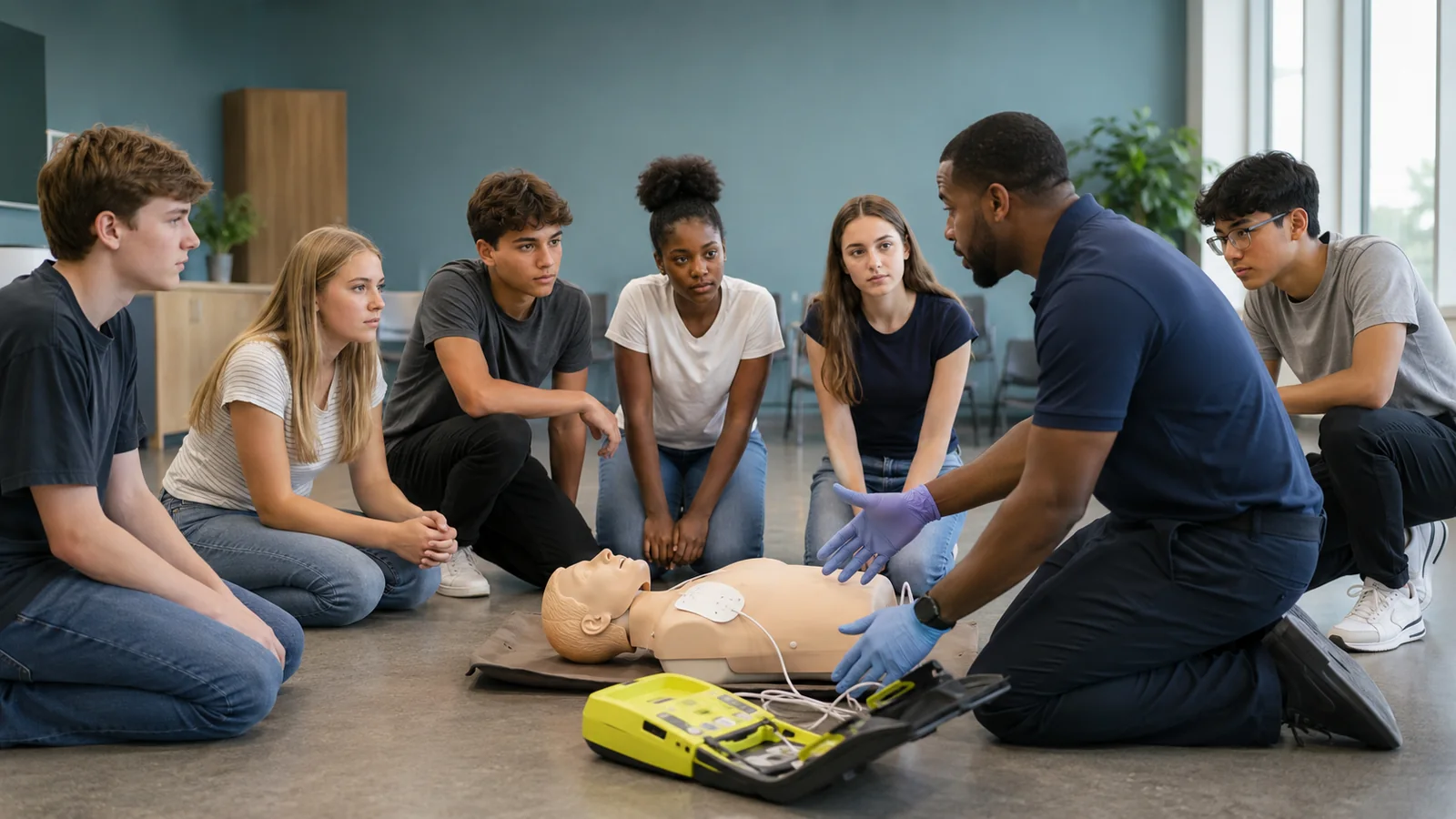
CPR, First Aid, and AED training access for families and communities.
Red Tape Foundation is developing training-access opportunities that help youth, caregivers, volunteers, families, and community organizations become better prepared to recognize and respond to emergencies.
Dates, locations, instructor availability, eligibility, course format, certification options, pricing, participant requirements, and scholarship opportunities will be published only after the required arrangements are confirmed.
Why preparation matters
People respond more confidently when they have learned and practiced what to do.
Emergencies can happen at home, at work, at school, during youth activities, at community events, while traveling, or while caring for another person. A medical emergency may be sudden, confusing, and emotionally difficult. People who have received appropriate instruction may be better prepared to recognize warning signs, activate emergency services, follow dispatcher directions, locate available safety equipment, and begin care within the limits of their training.
Emergency education is not simply about memorizing a sequence of steps. Good instruction helps participants understand how to assess a situation, protect themselves from unnecessary danger, recognize when immediate professional assistance is needed, communicate clearly, and act without exceeding the scope of what they have been trained to do.
Training may also help participants understand the importance of scene safety, personal protective equipment, consent, emergency communication, documentation, infection-control precautions, and appropriate follow-up after an incident.
No training course can eliminate all uncertainty or guarantee a particular outcome. Emergency conditions vary, and professional emergency personnel should be contacted whenever there is an immediate threat to life or safety.
In an emergency, call 911 and follow the directions of emergency dispatchers and responding personnel.
Understanding CPR
CPR education helps participants prepare for possible cardiac emergencies.
Cardiopulmonary resuscitation, commonly called CPR, is an emergency-response skill taught for situations in which a person may be unresponsive and not breathing normally. Course content varies based on the training provider, intended audience, participant age, delivery format, and whether the course includes a certification component.
Instruction may cover how to recognize a possible cardiac emergency, contact emergency services, perform chest compressions, provide rescue breaths when included in the course, use an automated external defibrillator, and continue care until professional help arrives or the situation changes.
Adult, child, and infant response techniques are not always identical. Participants should complete training appropriate to the people they may be responsible for. A parent caring for an infant, a youth babysitter, a workplace volunteer, and an activity leader may each need different course content or emphasis.
Red Tape Foundation does not treat online reading as a substitute for hands-on or instructor-led training when practical skills, evaluation, or certification are required. Public information can help people understand why training matters, but participants should follow the curriculum and instructions of the authorized provider delivering their course.
Understanding AEDs
AED education can make emergency equipment feel less intimidating.
An automated external defibrillator, commonly called an AED, is emergency equipment designed to provide prompts and analyze whether a shock is advised in certain cardiac emergencies. AEDs may be found in schools, workplaces, gyms, airports, public buildings, community facilities, churches, and event locations.
People may hesitate to approach an AED because they are unfamiliar with the device or worried about making a mistake. Appropriate training can help participants understand how an AED fits into the emergency-response process, how to follow device prompts, how to prepare the person safely, and how to continue care while emergency responders are on the way.
Training may also address equipment location, accessibility, signage, maintenance awareness, battery and pad readiness, emergency action planning, and the importance of ensuring that responsible personnel know where an AED is located.
Organizations considering AED readiness should rely on qualified guidance and applicable legal, medical, manufacturer, insurance, workplace, and program requirements. Red Tape Foundation may provide educational starting points or referrals but does not provide medical oversight or legal advice.
Understanding First Aid
First Aid education supports appropriate action during injuries and sudden illness.
First Aid education may help participants respond to common injuries, sudden illnesses, environmental conditions, and other situations that require immediate attention while professional care is being obtained.
Depending on the course, participants may learn how to assess an injured or ill person, control serious bleeding, respond to burns, recognize signs of shock, support someone experiencing a sudden medical problem, respond to choking, care for minor injuries, and determine when emergency services or professional medical evaluation are needed.
First Aid is not a replacement for medical diagnosis or treatment. Participants should understand the limits of their education and avoid delaying professional care when a situation is serious, uncertain, worsening, or beyond their level of training.
Organizations may also benefit from reviewing emergency procedures, first-aid supplies, communication methods, incident reporting, supervision plans, staff responsibilities, and procedures for contacting parents, guardians, emergency contacts, or professional responders.
Potential training areas
Program opportunities may include several levels of emergency-readiness education.
CPR and AED awareness
Recognizing possible cardiac emergencies, activating emergency response, understanding CPR fundamentals, and becoming familiar with AED use.
First Aid preparation
Responding appropriately to common injuries, sudden illnesses, environmental emergencies, and situations requiring professional medical care.
Adult-focused courses
Training intended for people responsible for adults in workplaces, volunteer settings, public events, households, or community programs.
Pediatric-focused courses
Instruction addressing emergencies involving infants and children for parents, babysitters, caregivers, teachers, coaches, and youth-program personnel.
Certification pathways
Courses delivered through an authorized provider and qualified instructor when formal completion or certification documentation is required.
Community awareness sessions
Introductory education that may help participants understand emergency planning, equipment, response roles, and available training options.
Choosing an appropriate course
The right training depends on the participant’s responsibilities and intended use.
A person seeking general household preparedness may have different needs from an employee who must meet a workplace requirement. A babysitter responsible for infants and young children may need pediatric-focused instruction. A coach, teacher, volunteer, healthcare worker, construction employee, childcare provider, or nonprofit program leader may need training tied to specific organizational, professional, licensing, or workplace expectations.
Before enrolling, participants should confirm:
- Whether the course includes adult, child, infant, or combined content
- Whether First Aid, CPR, AED, choking response, or other subjects are included
- Whether the course is awareness-based or certification-bearing
- Whether hands-on skills practice is required
- Whether an employer, school, agency, licensing body, or organization requires a specific provider or format
- Whether the completion credential has an expiration or renewal requirement
- Whether there are age, physical, language, technology, or participation requirements
- What fees, materials, identification, or advance preparation may be required
Red Tape Foundation will describe confirmed program details as clearly as possible when registration opportunities become available. Participants remain responsible for verifying that a course satisfies any specific workplace, regulatory, professional, school, or licensing requirement that applies to them.
Who may benefit
Practical preparation for people serving, supervising, or caring for others.
- Parents, guardians, grandparents, and family caregivers
- Babysitters and youth caregivers
- Foster-family and kinship caregivers
- Volunteers and service organizations
- Schools and youth-serving groups
- Community-event volunteers
- Nonprofit staff and program leaders
- Coaches, activity leaders, and recreation volunteers
- Faith-community volunteers
- Workplace safety team members
- Small-business owners and supervisors
- Community members seeking greater emergency readiness
Participation availability may vary by age, course provider, class format, curriculum, instructor requirements, physical participation expectations, language availability, and funding restrictions.
Youth and caregiver preparation
Emergency-readiness education is especially important for people responsible for children.
Babysitters, older siblings, youth volunteers, parents, guardians, and other caregivers may be the first people present when a child becomes injured, ill, unresponsive, or begins choking. They may also need to respond to burns, falls, allergic reactions, bleeding, environmental hazards, or household emergencies.
Age-appropriate education can help young caregivers understand that responsibility includes preparation, communication, supervision, emergency contacts, household rules, and knowing when to seek adult help immediately.
Red Tape Foundation’s developing youth-safety work is intended to connect babysitting readiness with broader emergency awareness. Any youth course will be structured according to the curriculum, supervision, instructor, facility, consent, and participant-safety requirements that apply to the specific program.
Barriers to training access
People may want emergency education but still be unable to participate.
Course fees are only one possible barrier. Participants may also face transportation limitations, childcare responsibilities, work schedules, limited weekend or evening options, language needs, uncertainty about eligibility, technology barriers, lack of nearby classes, and confusion about which type of training they need.
Community organizations may face a different set of barriers. They may need an instructor, suitable classroom space, sufficient enrollment, practice equipment, registration support, insurance, participant communication, supplies, scheduling, and funding before a class can occur.
Red Tape Foundation may help address these challenges by:
- Seeking charitable support for scholarship seats
- Identifying qualified instructors or authorized providers
- Discussing donated or low-cost training locations
- Coordinating participant outreach with community organizations
- Helping clarify course options and participation requirements
- Seeking sponsors for materials, equipment, or instructor expenses
- Developing understandable registration and scholarship information
- Connecting interested groups with appropriate resources when direct programming is not available
Not every barrier can be resolved immediately, and not every request will result in a scheduled class. Our goal is to build a practical structure that makes training more accessible when appropriate resources and partners are available.
Program development
Training availability depends on qualified instruction and responsible planning.
Red Tape Foundation may coordinate outreach, participant access, facilities, materials, scholarships, sponsorships, registration support, and community partnerships. Any certification-bearing course must be delivered consistently with the requirements of the applicable authorized training provider and qualified instructor.
Before announcing a class, we may need to confirm:
- The authorized training provider or curriculum
- The instructor’s qualifications and availability
- The course format and subjects included
- The class date, time, duration, and location
- Facility suitability and participant accessibility
- Minimum and maximum enrollment
- Participant age or eligibility requirements
- Equipment, supplies, workbooks, and technology
- Certification or completion-document procedures
- Registration, cancellation, and attendance expectations
- Scholarship funding or sponsorship restrictions
- Insurance, safety, consent, supervision, and administrative requirements
The Foundation will not advertise a course as open, promise certification, or collect registration fees until the essential instructor, curriculum, schedule, location, participant requirements, and delivery process are confirmed.
Training scholarships
Scholarships and sponsorships may help reduce participation barriers.
When funding and appropriate classes are available, scholarship-supported seats may help eligible participants with course fees, certification expenses, workbooks, training materials, or other approved program costs.
Scholarships are not automatically available for every class. Availability may depend on donor restrictions, grant requirements, participant eligibility, geographic service area, program capacity, course cost, confirmed funding, and the charitable purpose of the opportunity.
A scholarship request may require basic information about the participant, requested course, financial or access barrier, intended use of the training, and any applicable deadline. The Foundation may also need to verify course details or coordinate directly with the provider before approving support.
Submitting a request does not guarantee funding, enrollment, certification, or placement in a particular class.
Schools, nonprofits, employers, and community groups
Help bring practical safety education to more people.
Organizations may contact Red Tape Foundation to discuss potential training locations, participant outreach, group needs, sponsored seats, facilities, instructors, volunteer support, educational materials, or future partnerships.
A productive partnership may involve one or more organizations contributing different parts of a program. One partner may provide space, another may identify participants, a sponsor may cover course expenses, and a qualified provider may deliver the instruction.
Potential partners may include:
- Schools and parent organizations
- Youth programs and childcare organizations
- Nonprofit and faith-based organizations
- Employers and workforce-development programs
- Healthcare and public-safety professionals
- Civic and service clubs
- Community centers and recreation programs
- Local businesses willing to sponsor training access
- Facilities able to host responsible educational activities
Partnership discussions do not guarantee that a program will be scheduled. Proposals are evaluated based on mission alignment, charitable benefit, instructor availability, participant safety, organizational capacity, funding, and the practical requirements of the requested training.
How community members can help
Training access can be supported through donations, sponsorships, facilities, outreach, and volunteer service.
Community support may help cover instructor expenses, participant scholarships, course materials, certification fees, educational equipment, facility costs, outreach, translation, technology, and responsible program administration.
Qualified instructors and experienced professionals may also be able to support curriculum review, referrals, educational planning, community outreach, or future program delivery when appropriate.
Organizations interested in sponsoring a group, donating space, supporting scholarships, or helping identify participants may contact the Foundation with a description of the proposed support.
Frequently asked questions
Questions about developing CPR, First Aid, and AED opportunities
Are classes currently open?
No. General registration is not currently open. Confirmed opportunities will be published after the instructor, curriculum, location, schedule, participant requirements, cost, and registration process are finalized.
Will every class provide certification?
No. Some future opportunities may be awareness-based, while others may include certification or completion documentation through an authorized provider. Each announcement will identify the confirmed format.
Can Red Tape Foundation guarantee that a course will satisfy my employer or licensing requirement?
No. Participants must verify the exact course, provider, format, subjects, and completion documentation required by their employer, school, agency, licensing body, or professional organization.
Will scholarships be available?
Scholarships may be available when funding, eligible participants, and appropriate courses are confirmed. Availability cannot be guaranteed.
Can an organization request a private or group class?
Organizations may submit an inquiry describing their group, location, number of participants, preferred timing, training needs, and available resources. An inquiry does not guarantee scheduling.
Can youth participate?
Participation depends on the course provider, curriculum, instructor requirements, age restrictions, parent or guardian consent, supervision, and the physical and educational expectations of the specific program.
Does this page provide emergency instructions?
No. This page provides general program and educational information. Call 911 for an immediate emergency and follow the instructions of emergency personnel.
Can I volunteer as an instructor?
Qualified individuals may express interest through the volunteer or contact page. Credentials, authorization, experience, insurance, background screening, supervision, and program requirements may need to be verified before any instructional role is approved.
Our commitment
We will describe programs accurately and distinguish plans from completed services.
Red Tape Foundation is actively developing this program area. We will not report projected participants as people already served, describe an unconfirmed class as scheduled, or promise scholarships before funding is available.
As opportunities are confirmed, this page may be updated with course descriptions, eligibility requirements, registration instructions, locations, schedules, provider information, scholarship details, accessibility information, and verified program results.
Visitors can follow organizational development through our News and Impact pages.
Important boundaries
This page describes developing educational opportunities and does not provide medical advice, emergency services, legal advice, workplace-compliance advice, or a guarantee that a particular course, certification, instructor, date, scholarship, or outcome will become available.
Red Tape Foundation does not replace licensed healthcare professionals, emergency responders, authorized training providers, employers, regulatory agencies, or professional advisors.
Call 911 for an immediate threat to life or safety. Participants should follow the instructions and limitations of their completed training, the directions of emergency personnel, and the requirements of any applicable employer, agency, school, licensing body, or program.
Take the next step
Help expand responsible emergency-readiness education.
Contact Red Tape Foundation to express interest in future training, discuss a community partnership, ask about scholarship development, sponsor participant access, volunteer qualified expertise, or identify a group that may benefit from future programming.