Training-access update · July 22, 2026
Red Tape Foundation is developing partnerships, educational guidance, and charitable support intended to reduce barriers to CPR, First Aid, and AED education. The work focuses on helping individuals and community organizations identify appropriate training while recognizing that course requirements, certification, instruction, facilities, equipment, and outside acceptance can differ.
The Foundation is not announcing a continuously available class or promising certification through this update. Training opportunities will be described as available only after the instructor or provider, course type, location, schedule, costs, registration process, and participant requirements have been confirmed.
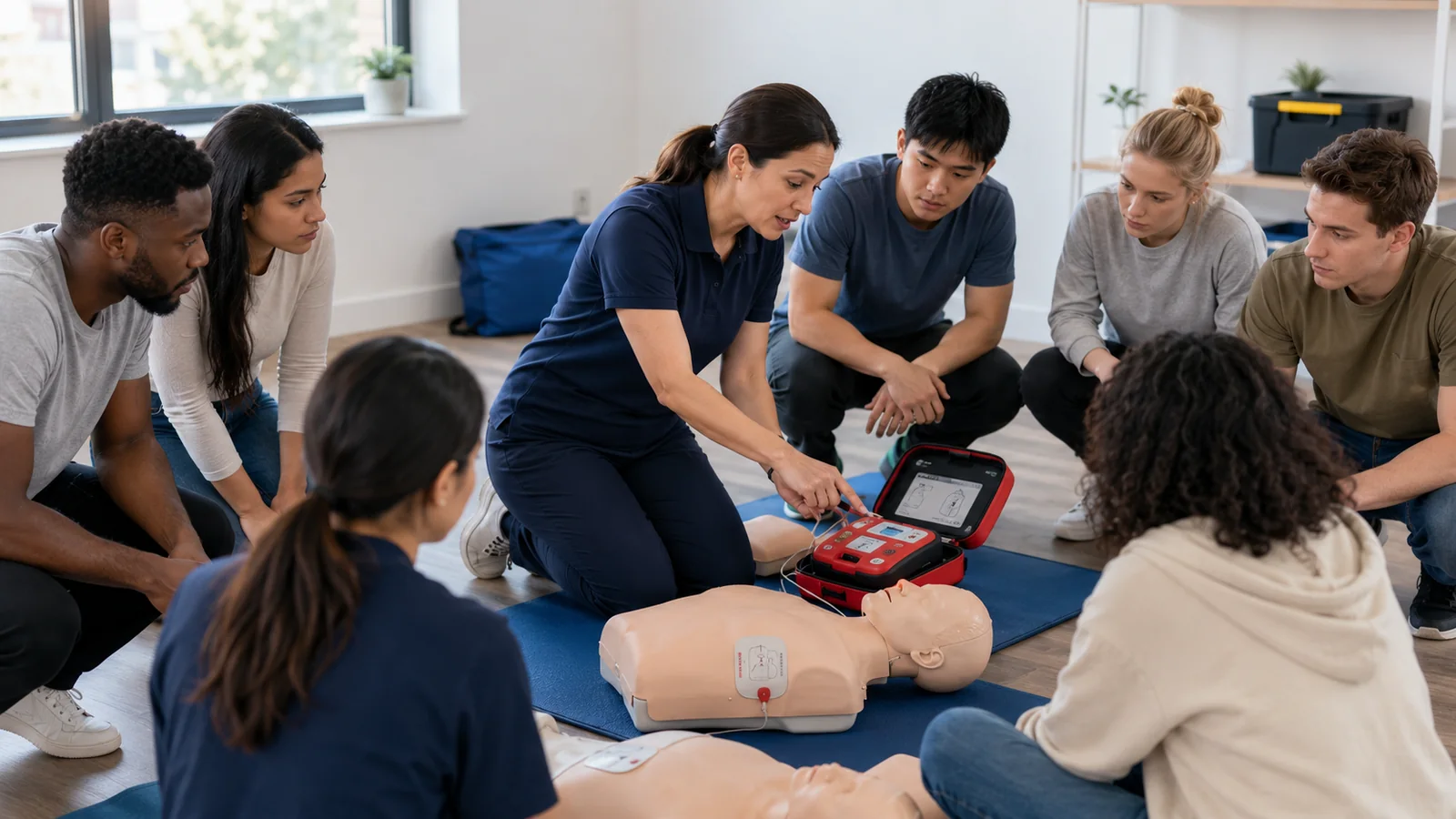
Access involves more than the course fee
Cost can prevent participation, but it is not the only barrier. People may also face limited local schedules, transportation problems, language needs, uncertainty about which course is appropriate, employer deadlines, childcare responsibilities, technology barriers, or confusion about whether an online-only course will be accepted.
Organizations seeking group training may need an appropriate room, enough practice equipment, participant communication, scheduling coordination, an instructor agreement, accessibility planning, and a clear process for handling registration and payment.
Charitable support may help address some of these barriers through sponsored seats, scholarships, host facilities, materials, outreach, or other approved assistance.
Course selection matters
CPR and First Aid courses are not interchangeable. A participant may need training for employment, licensing, volunteering, caregiving, school, personal preparation, or organizational policy. The receiving employer, agency, school, regulator, or credentialing body may require a particular provider, delivery method, skills evaluation, course level, or expiration period.
Before enrolling, participants should confirm:
- The exact course or credential required.
- Whether hands-on skill practice or evaluation is required.
- Whether blended learning is accepted.
- Which provider or issuing organization is accepted.
- The deadline by which proof must be submitted.
- Whether pediatric, adult, healthcare-provider, workplace, or another specialized content area is needed.
- Whether the participant must renew an existing credential rather than complete an initial course.
Red Tape Foundation can provide general educational direction but cannot guarantee that a third party will accept a course. The participant remains responsible for confirming the requirement with the organization that requested the training.
Certification remains the provider’s responsibility
A course provider or issuing organization determines whether the participant has satisfied its attendance, knowledge, skills, identification, payment, and other requirements.
The Foundation will not describe someone as certified merely because that person registered, received funding, attended part of a session, or completed an educational resource. Certification should be reported only when issued or documented by the responsible provider.
Training also does not guarantee that a participant will respond perfectly during an emergency. Skills may decline without review and practice. Emergency conditions can be unpredictable, and participants should follow current instruction, activate emergency services when appropriate, and work within their training and legal authority.
Scholarships and sponsored access
The Foundation is developing a scholarship process that may support approved training expenses when available charitable funding, participant need, course suitability, timing, and eligibility align.
A request is not an award. The Foundation may need to review the provider, course, cost, charitable purpose, deadline, and available funds before approving assistance.
Support may take the form of a sponsored seat, direct payment to a provider, materials, an approved reimbursement arrangement, or another documented method. Participants should not assume that a cost incurred before approval will be reimbursed.
Community partnership opportunities
Healthcare organizations, employers, schools, nonprofits, instructors, service clubs, training providers, facilities, and businesses may help expand access through qualified instruction, meeting space, equipment, participant outreach, translation, sponsored seats, printing, technology, or grant support.
A proposed partnership must define the role of each organization. The Foundation should not be listed as the course provider, certifying organization, host, sponsor, or administrator unless that role has been confirmed.
Current development work
The Foundation is currently improving public course-selection guidance, exploring community training relationships, developing scholarship and sponsorship pathways, identifying facilities and instructors, and building responsible processes for announcing confirmed opportunities.
Review the full CPR, First Aid, and AED Access page for course-selection guidance and program boundaries. Potential applicants may review the Training Scholarships page. Organizations interested in supporting access may review Community Partnerships.
Questions may be submitted through the Contact page. Contacting the Foundation does not register a participant, reserve a seat, create a scholarship award, or confirm certification.